

I wasn’t planning to write about Singapore this week.
After all, MyPropertyPlaces is primarily about the Malaysian property market. There are plenty of local stories that deserve our attention.
But every now and then, something happens across the Causeway that makes you stop scrolling.
This was one of those moments.
Singapore recently announced that, from 2027, property agents will generally need to complete at least three property transactions over a three-year period to renew their licence. Agents who don’t meet the requirement may still have alternative pathways, such as passing a refresher examination, subject to the applicable rules.
When I first saw the headline, my immediate thought was…
“That’s quite a significant change.”
But as I read further, I realised this wasn’t really a story about licence renewals.
It was a story about how a profession continues to evolve.
And that made me wonder what conversations it might spark beyond Singapore.
Before We Go Any Further…
Let me be clear about one thing.
This isn’t an article suggesting that Malaysia should adopt the same policy.
Singapore and Malaysia have different property markets, different regulatory frameworks and different industry structures. What works well in one country may not necessarily work in another.
What interested me wasn’t the rule itself.
It was the bigger conversation behind it.
How do we ensure property professionals continue to stay current, continue learning, and continue earning the trust that consumers place in them?
That’s a discussion worth having, regardless of where we live.
Experience or Recent Activity?

Imagine you’re looking for a property agent.
One tells you they’ve been in the industry for fifteen years.
Another says they’ve completed dozens of transactions over the last three years.
Which matters more?
Years of experience? Recent market activity? Client testimonials? Local knowledge? Honesty?
Most of us would probably answer…
“It depends.”
And I think that’s exactly why this topic is so interesting.
Why Singapore Is Making This Change
From what I’ve read, the intention isn’t simply to make licence renewals more difficult.
Singapore’s Council for Estate Agencies (CEA) believes property professionals should remain engaged with the market and continue developing their knowledge as regulations, financing policies and consumer expectations evolve.
When you think about it, property isn’t a static industry.
Loan policies change.
Government regulations evolve.
Technology changes the way homes are marketed.
Consumer expectations today are very different from what they were even five years ago.
Keeping up takes effort.
Three Transactions… Is That a Lot?
The headline naturally draws attention to the number.
Three transactions.
Initially, it sounds like a demanding target.
Then you realise it’s spread across three years.
That’s roughly one completed transaction a year.
For many full-time practitioners, that may seem fairly modest.
At the same time, Singapore also recognises that transaction numbers aren’t the only measure of competence. That’s why agents who don’t meet the threshold may still have other ways to demonstrate their professional knowledge, including refresher examinations where applicable.
That balance caught my attention.
Different Journey

As I thought more about it, I also found myself thinking about the many different people who make up our profession.
Some agents specialise in high-end residential properties where each transaction can take months to complete.
Others focus on commercial real estate, industrial properties or land acquisitions.
Some build long-term relationships with a smaller group of clients rather than pursuing high transaction volumes.
Others may step away from active selling for a period because of family commitments, health reasons or other personal circumstances before returning to the industry.
Real estate isn’t a one-size-fits-all profession.
That’s why I think it’s important not to judge any professional purely by the number of transactions they’ve completed.
At the Same Time…
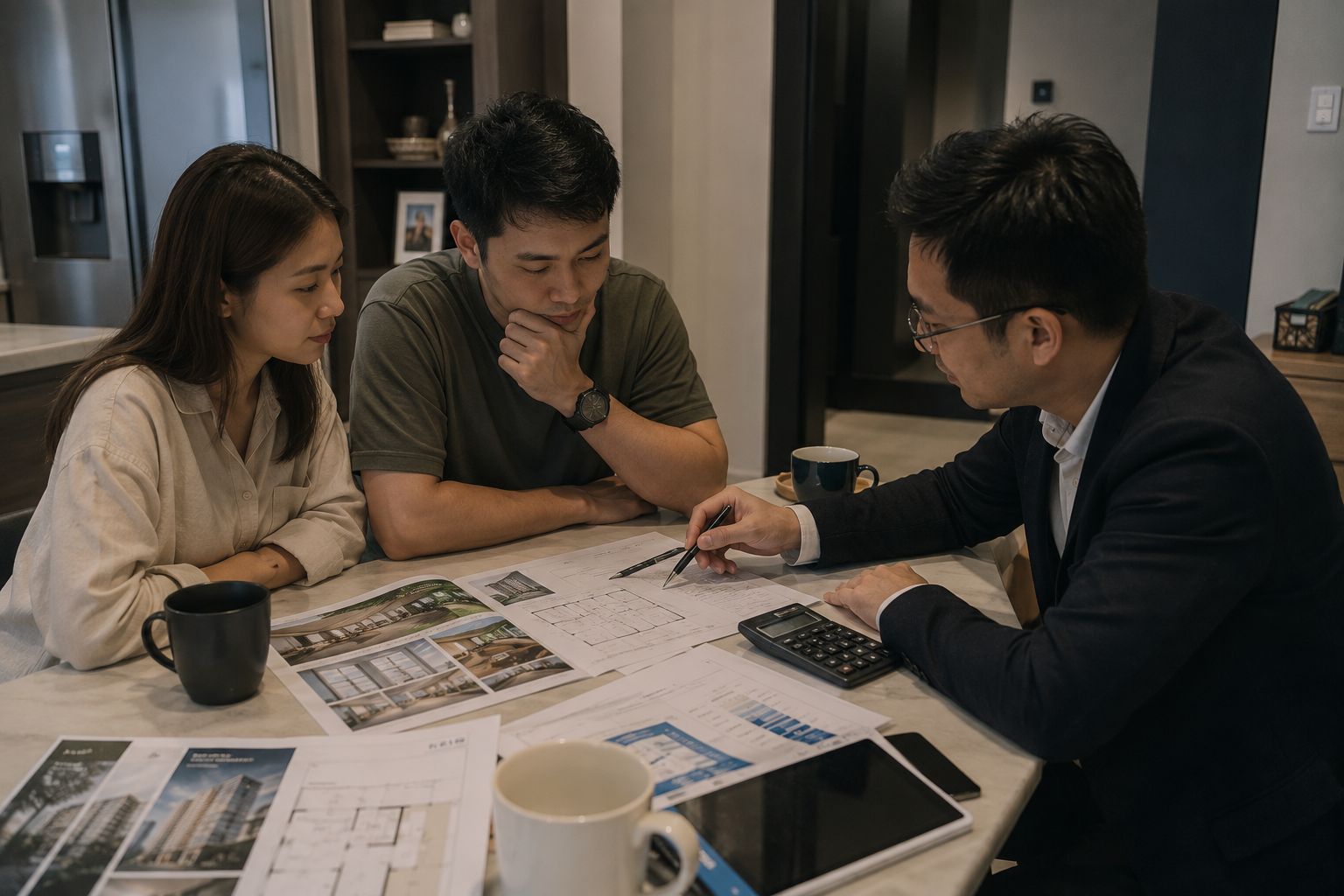
There’s another perspective that deserves equal consideration.
Many active practitioners naturally stay close to what’s happening in the market.
They’re speaking with buyers.
Meeting sellers.
Negotiating offers.
Working alongside bankers, lawyers and valuers.
Every transaction teaches something.
Sometimes it’s about pricing.
Sometimes it’s about changing regulations.
Sometimes it’s about solving unexpected problems that no textbook could ever prepare you for.
That practical experience is valuable, and there’s no doubt that staying actively engaged helps many professionals sharpen their skills.
Wrong Question, Maybe?
The more I reflected on Singapore’s announcement, the more I realised that perhaps the real question isn’t…
“How many transactions has an agent completed?”
Perhaps it’s…
“How do we best measure professionalism?”
Is it experience?
Education?
Ethics?
Client satisfaction?
Continuous learning?
Recent market exposure?
The truth is, it’s probably a combination of all these things.
Real estate has always been a people business.
Knowledge matters.
Integrity matters.
Communication matters.
Experience matters.
And none of those qualities can be fully captured by a single number.
One Interesting Detail
One aspect of Singapore’s announcement received far less attention than the transaction requirement.
Licence validity will also be extended from one year to three years.
In other words, while professional expectations are increasing, administrative renewals become less frequent.
I thought that was an interesting balance.
Higher expectations.
Less paperwork.
A focus on long-term professional competency rather than annual administrative processes.
Whether it proves successful is something only time will tell.
So… What Can Malaysia Learn?
Rather than asking whether Malaysia should copy Singapore, perhaps the better question is this:
What conversations can we learn from?
Every profession evolves.
Medicine evolves.
Law evolves.
Education evolves.
Real estate is no different.
Consumers today are more informed than ever. They have access to online listings, market data, financing calculators and countless property resources.
That means the role of a property professional is evolving too.
Perhaps the greatest takeaway from Singapore’s announcement isn’t the transaction requirement itself.
Perhaps it’s the reminder that professional development doesn’t stop the day we receive our licence.
Learning, adapting and staying current are lifelong responsibilities, regardless of which country we practise in.
Final Thoughts

One thing I love about the real estate industry is that no two professionals build their careers in exactly the same way.
Some become outstanding negotiators.
Some are trusted advisers.
Some specialise in investments.
Others become experts in particular neighbourhoods or property sectors.
Different paths can all lead to exceptional service.
Singapore has chosen one approach to strengthening professional standards within its own market.
Whether other countries eventually consider similar ideas remains to be seen.
For me, the more valuable takeaway is the conversation itself.
How do we continue building a profession that earns public trust, embraces lifelong learning and delivers the highest standards of service to the people who place their confidence in us?
That’s a question worth asking.
And I suspect it’s one we’ll continue discussing for many years to come.
💬 Join the Conversation
What are your thoughts on Singapore’s new licensing requirements?
Do you think maintaining professional standards is better measured through ongoing education, practical experience, client feedback, ethics, recent market activity, or perhaps a combination of these?
I’d genuinely love to hear your perspective, whether you’re a property professional, an investor, a homeowner or simply someone interested in how our industry continues to evolve.

Disclaimer
This article is intended to encourage thoughtful discussion about developments in the real estate profession following recent regulatory changes announced in Singapore.
The views shared here are personal reflections and should not be interpreted as support for or opposition to any particular regulatory approach in Malaysia or elsewhere. Singapore and Malaysia have different property markets, regulatory frameworks and industry structures, and policies that are suitable for one country may not necessarily be appropriate for another.
Above all, this article is not intended to judge or diminish the professionalism of any property practitioner. Competence, professionalism and client service are shaped by many factors, including knowledge, ethics, continuous learning, experience and dedication. Every property professional’s career journey is unique, and meaningful conversations about raising industry standards should always be approached with respect for that diversity.