
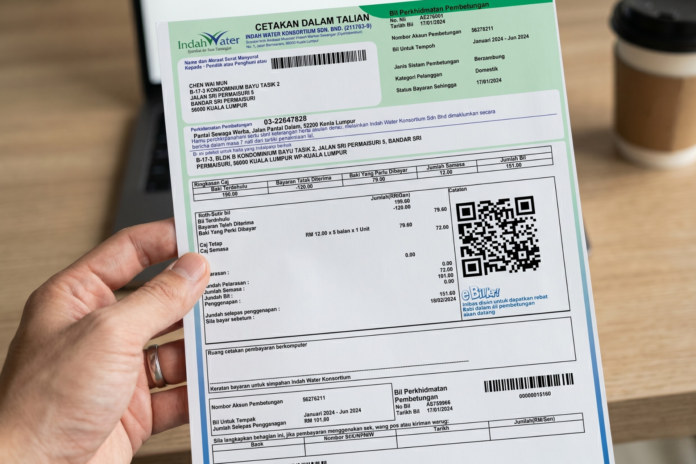
Every few months, a familiar argument breaks out in property group chats all across Malaysia. A landlord sends a screenshot of a bill to their tenant, and the tenant replies: “But boss, I already paid the Air Selangor bill last week! What on earth is this separate RM72 charge?”
Welcome to the world of Indah Water Konsortium (IWK) bills. Unlike your usual water bill that tracks the clean water flowing into your taps, your IWK bill is all about treating the dirty wastewater that gets flushed down your drains and toilets.
But when it comes to a rental property, who actually drops the money to clear this bill? Is it the person who owns the property, or the person currently using the toilet? Let’s break it down easily.
The Short Answer: What Does the Law Say?
If you look straight at the legal side under the Sewerage Services (Charges) Regulation 1994, Indah Water explicitly states that the “customer” or “user” means both the owner or the occupier (the tenant) of the premises.
According to official guidelines on the Indah Water Portal, the occupier of the house is primarily responsible for paying the sewerage charges. However, here is the catch for landlords: if the tenant fails to pay up or completely vanishes, the property owner becomes jointly liable to clear those arrears.
So even if you have a private agreement with your tenant, IWK’s system ultimately holds the landlord responsible for any massive outstanding debt tied to the building.
In the Real World: The Tenancy Agreement Wins
Because the law allows a bit of flexibility on who actually physically makes the payment, everything comes down to what you wrote inside your Tenancy Agreement (TA).
Usually, the standard practice in Malaysia follows a simple rule of thumb: Landlords cover fixed property taxes (like assessment rates and quit rent), while tenants cover usage-based utilities (electricity, water, internet, and yes—sewerage). After all, the tenant is the one actually using the facilities!
To prevent any awkward misunderstandings halfway through a lease, your TA needs to state the arrangement crystal clearly.
If the Tenant Pays:
The contract should include a clause explicitly saying something like:
“The Tenant shall bear the responsibility to pay all Indah Water sewerage bills issued during the rental period.”
If the Landlord Absorbs It:
Some landlords prefer to keep things simple by absorbing the cost into the monthly rent so they can track the property payments themselves. In that case, the clause should look like this:
“The Landlord shall bear the cost of Indah Water services, and the billed amount is deemed included in the monthly rental amount.”
Know Your Numbers: Current IWK Rates
One reason tenants get so confused by Indah Water is the billing cycle. Unlike TNB or your regional water board which bill you monthly, IWK statements for domestic homes are only issued twice a year (once every six months). That’s why the amount looks larger at first glance.
According to the official Water Services Industry (Sewerage Services Charges) Regulations, the national flat rates for domestic premises connected to the public sewerage grid are adjusted on a set schedule:
- Standard Houses & Condos: Billed at RM15.00 per month (effective 1 January 2026). Your 6-month statement will total exactly RM90.00.
- Low-Cost Housing: Billed at RM4.00 per month (RM24.00 every six months).
- Village / Estate Homes: Billed at RM5.00 per month (RM30.00 every six months).
Pro-tip for everyone: If you sign up for IWK e-billing on their portal or mobile app instead of waiting for a physical paper bill to arrive in your mailbox, you can easily check your balance, view your transaction history, and pay digitally.
The Bottom Line
At the end of the day, there is no hard-and-fast rule saying a landlord must pay or a tenant must pay—it’s completely up to your mutual agreement before signing the contract.
If you are a tenant, check your TA closely so you don’t get hit by an unexpected bi-annual bill. If you are a landlord, make it a habit to log into the IWK Customer Portal once every six mont