

If you live in a landed house in Petaling Jaya or Shah Alam, your monthly TNB bill can easily feel like a second mortgage—especially when the afternoon heat forces everyone to turn on the air-con at the same time.
It’s no surprise that solar panels are becoming the ultimate roof accessory for Malaysian homeowners. Thanks to Malaysia’s new Solar ATAP programme (which kicked off in January 2026 to replace the old NEM scheme), the government has removed the old fixed quotas. You can now install a system up to 100% of your maximum power demand and export excess energy back to the grid for retail-linked bill credits.
But before you sign a 25-year contract with an installer, let’s separate the glossy marketing brochures from actual reality. How much can you really save? Is the setup cost ridiculously high? And can you truly tell TNB to take a hike?
Let’s look at the pros, cons, and honest math of residential solar in 2026.
Can I Completely Cut off TNB?
Let’s answer this one immediately: No, you cannot (and should not) totally replace your current power supply.
Unless you want to live like a high-tech hermit, you cannot cut your TNB cable. Residential solar installations in Malaysia are grid-tied systems. They work in parallel with the national grid.
Here is why:
- The Sun Sleeps at Night: Solar panels only generate electricity when the sun is out. At 9:00 PM, when your household is blasting the TV and the master bedroom air-con, your solar panels are doing absolutely nothing. You still need TNB to power your night.
- The Battery Trap: To go completely off-grid, you would need a massive Battery Energy Storage System (BESS) to store daylight electricity for the evening. While a 10 kWh battery system is an excellent way to eliminate evening peak purchases, trying to buy enough battery storage to run an entire 3-storey house completely independent of the grid would double or triple your installation cost.
- The Safety Lockout: For safety reasons, if there is a power outage in your neighborhood, your grid-tied solar inverter will automatically shut down too. This prevents your panels from feeding live electricity back into the street wires while TNB technicians are trying to fix the cables.
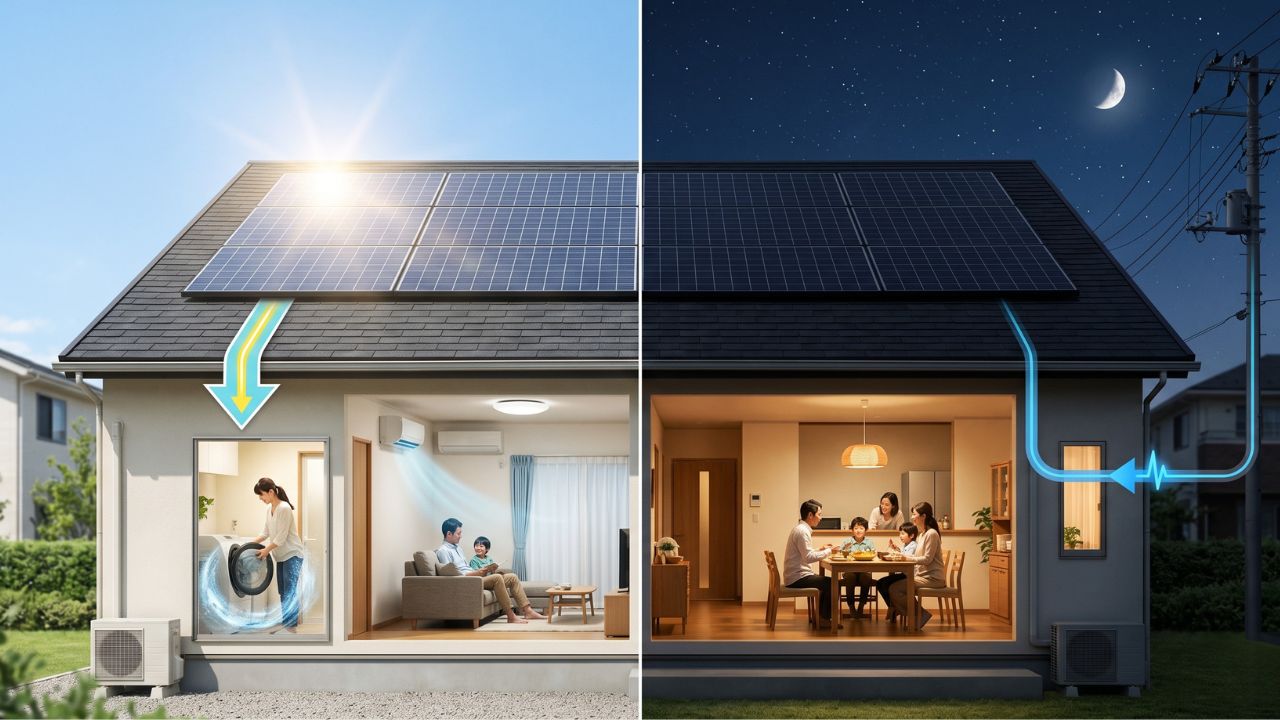
Think of solar not as a replacement for TNB, but as a defensive shield that blocks TNB from charging you the highest tariff rates during the day.
How Much Does It Cost to Set Up? (2026 Market Rates)
Going solar is a significant capital expenditure, but prices have stabilized significantly over the last few years. Today, Tier-1 N-Type Monocrystalline panels have become the gold standard for handling our intense tropical heat.
The all-inclusive setup cost (which covers the panels, inverter, mounting gear, SEDA submissions, and TNB bi-directional meter upgrades) generally breaks down by house type:
| House Type & System Size | Average Monthly TNB Bill | Estimated Setup Cost (All-In) | Expected Payback Period |
| Small Terrace (3kWp to 5kWp) | RM150 – RM250 | RM15,000 – RM19,500 | 5 to 6 years |
| Double-Storey / Semi-D (5kWp to 8kWp) | RM300 – RM500 | RM20,000 – RM28,000 | 4 to 5 years |
| Large Semi-D / Bungalow (10kWp to 12kWp) | RM600 – RM900 | RM33,000 – RM46,000 | 4 to 5 years |
💡 Owner’s Tip: If you have an older landed home that runs on a single-phase electrical supply, and you want to install a system larger than 6kWp, you will need to pay an extra RM400–RM800 to upgrade your home to a 3-phase supply system.
How Much Do You Actually Save?
Let’s look at a realistic scenario. If you own a double-storey semi-D and your current TNB bill is averaging around RM500 a month, you are hitting the painful upper tranches of the tariff block.
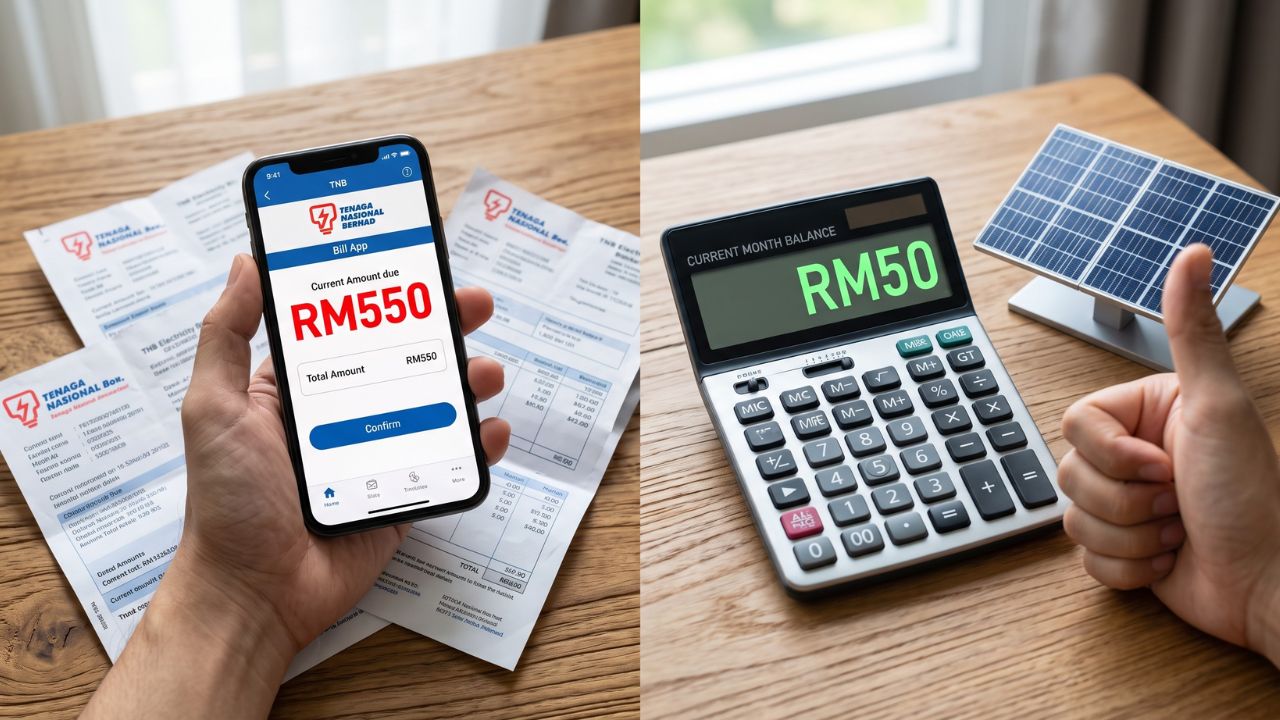
By installing a popular 8.68 kWp solar package (which costs roughly RM20,500 upfront), your panels will easily wipe out your daytime electricity usage and export the rest to the grid. Your monthly bill can instantly drop by RM400 to RM450.
- Annual Savings: ~RM4,800 to RM5,400
- Payback Period: Roughly 4.5 years
- 25-Year Lifetime Savings: Upwards of RM95,000+
Once you pass that 4.5-year break-even point, your solar setup is completely paid off, and it will continue generating free daytime electricity for the next two decades. It’s easily one of the highest-yielding personal finance upgrades you can give a landed property.
What About Maintenance? (The Hidden Costs)
One of the best things about solar PV technology is that it has zero moving parts. It doesn’t break down easily. However, “low maintenance” does not mean “no maintenance.” You need to budget for two specific realities:
The Periodic Wash (Every 6 to 12 Months)
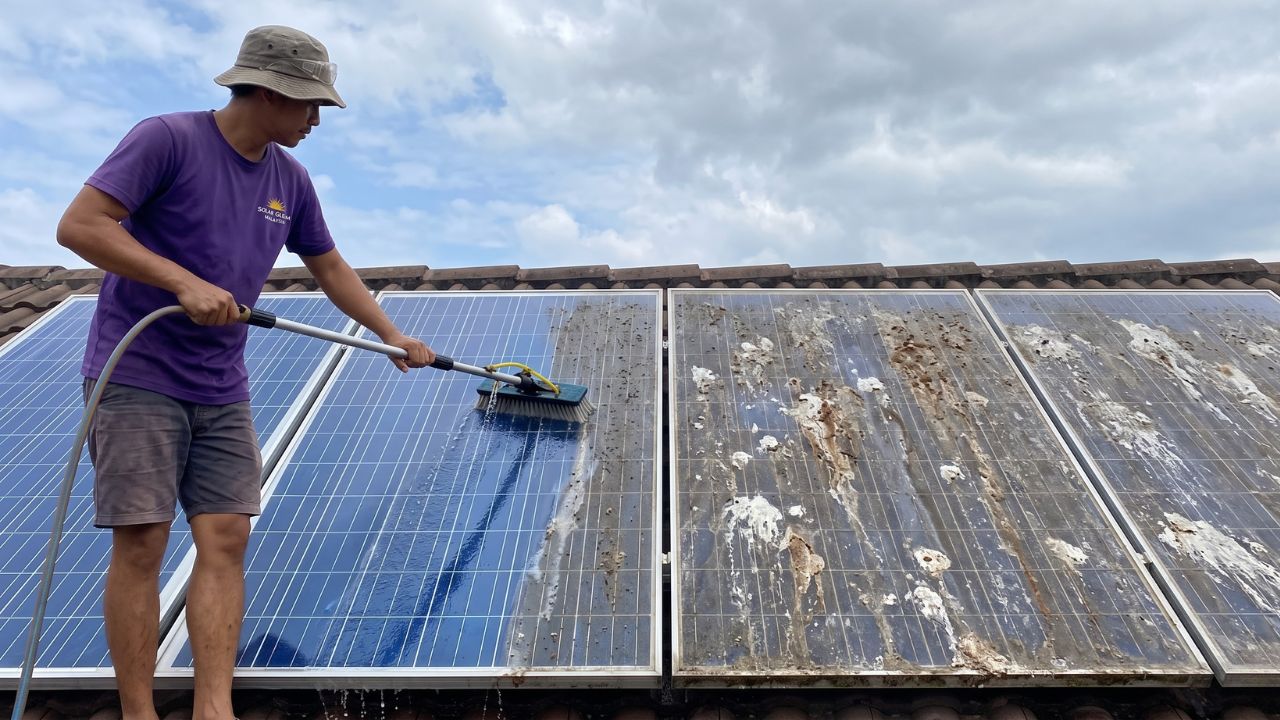
Malaysia’s climate is incredibly dusty, and we get plenty of bird droppings. If a layer of grime bakes onto your panels under the hot sun, your solar efficiency can drop by 10% to 15%. While our heavy tropical rain helps wash away basic dust, you should still hire a professional solar cleaning service once a year. This usually costs between RM300 to RM500 per service for a standard terrace or semi-D.
The Inverter Replacement (The Big Mid-Life Expense)
While your Tier-1 solar panels come with a massive 25-year performance warranty, the solar inverter (the brains of the system that converts the raw sun juice into usable household electricity) works incredibly hard. Inverters typically have a lifespan of 10 to 15 years. You must mentally budget RM3,000 to RM6,000 to replace the inverter around Year 12.
The Honest Pros and Cons of Going Solar
Before you make your decision, let’s weigh the scales cleanly:
The Pros
- Massive, Instant Deflation: It aggressively slashes your monthly TNB bill from day one.
- Property Value Multiplier: Modern home buyers actively look for eco-friendly, energy-efficient features. A fully paid-off solar system with an active Solar ATAP contract makes your house stand out significantly on property portals.
- Hedging Against Tariff Hikes: When electricity tariffs inevitably go up in the future, your ROI actually gets faster because the value of the energy you generate increases.
The Cons
- High Upfront Capital: Parting with RM20,000+ cash upfront is a bitter pill to swallow. (Though many local banks now offer 0% credit card installment plans or green loans to soften the blow).
- Roof Dependency: If your roof is heavily shaded by giant trees or neighboring towers, or if your roof faces dead-east or dead-west instead of the optimal north/south orientation, your generation capacity will take a hit.
- It’s Only for Landed Homes: If you own a high-rise condominium unit, you can’t exactly mount 14 solar panels on your balcony railing. This luxury is strictly for landed homeowners.
Final Verdict: Is It Worth It?
If your monthly TNB bill is consistently below RM150, don’t bother. Your consumption is too low, and it will take you more than a decade just to break even on the equipment.
However, if your monthly bill is RM300 and above, and you plan on living in your landed home for at least the next 5 years, installing solar is a no-brainer. The combination of our high tropical sun hours, the new friendly Solar ATAP framework, and excellent long-term equipment warranties means that your roof can stop being a giant heat sponge and start acting like a predictable, money-saving asset.
Disclaimer
Please Note: This article is written for informational, educational, and lifestyle entertainment purposes based on current 2026 Malaysian energy frameworks and standard residential solar installation practices. Individual savings, setup costs, and payback periods can vary significantly depending on your specific roof orientation, individual consumption habits, shading, and final quotes from SEDA-registered installers. Always request a professional site assessment before making financial commitments.