
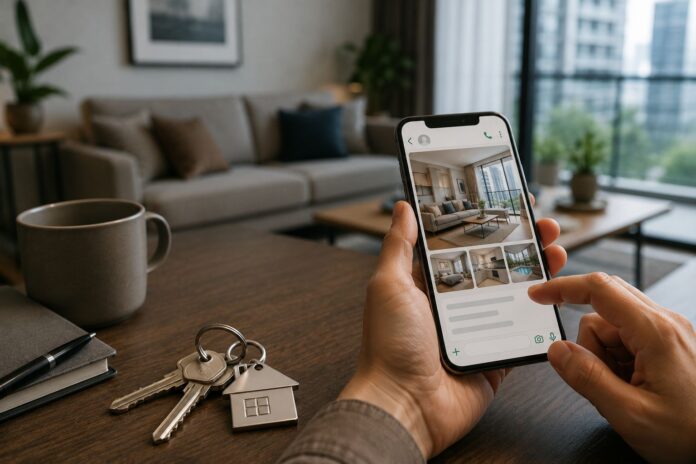
Scammers rarely begin with lies.
More often than not, they begin with a conversation.
A friendly WhatsApp message. A professional-looking property listing. A polite phone call. Someone who appears genuine and knows exactly what to say.
That’s what makes rental scams so dangerous.
Most people don’t lose money because they ignore obvious warning signs. They lose money because everything feels normal—until it’s too late.
Whether you’re a landlord renting out your property or a tenant searching for your next home, understanding how these scams work is one of the best ways to protect yourself.
Here are seven rental scam tactics that continue to catch Malaysians off guard.
1. The Property Doesn’t Actually Exist
You come across a beautifully furnished condominium at a rental price that seems almost too good to be true.
The “owner” explains that they’re currently overseas and need to rent the property quickly. Several people are interested, but they’ll reserve the unit if you transfer a booking deposit immediately.
It sounds urgent, but believable.
The problem?
The property may never have been available in the first place.
Scammers often copy photographs from genuine property listings and repost them elsewhere at a much lower rental. Once a deposit is transferred, they disappear, leaving the victim with no property to rent and little chance of recovering the money.
How to protect yourself:
- Never pay a booking fee before viewing the property.
- Verify that the property is genuinely available.
- Be cautious if the rental price is significantly lower than similar units nearby.
- If someone refuses to arrange a physical viewing without payment, walk away.
2. The Fake Property Agent

Everything appears legitimate.
The individual meets you at the property, answers your questions confidently, and even presents a business card or a REN tag.
Only later do you discover that the agency never employed that person, or that the REN number actually belongs to someone else.
Unfortunately, identity theft isn’t limited to banking or online shopping. Scammers have been known to copy photographs, impersonate registered real estate negotiators, and misuse the branding of legitimate real estate agencies to gain a victim’s confidence.
Professional appearances should never replace proper verification.
How to protect yourself:
- Verify the negotiator’s REN number through official channels.
- Contact the agency directly if you’re unsure.
- Be cautious if payments are requested to a personal account that doesn’t match the information provided.
3. The Too-Perfect Tenant
Landlords often dream of finding the ideal tenant.
Someone who agrees to the asking rental without negotiation.
Someone who wants to move in immediately.
Someone who appears polite, responsive and financially secure.
Ironically, that’s exactly the image some scammers try to create.
In some cases, landlords receive fake employment documents, forged identification cards or edited proof of payment. Others are pressured into handing over the keys before funds have actually cleared.
The lesson isn’t to become suspicious of every good tenant.
It’s to remember that every tenant—good or bad—should go through exactly the same verification process.
How to protect yourself:
- Verify identity documents where appropriate.
- Wait until payments have cleared before releasing keys.
- Conduct tenant screening consistently for every applicant.
4. “I’ve Already Transferred the Money”
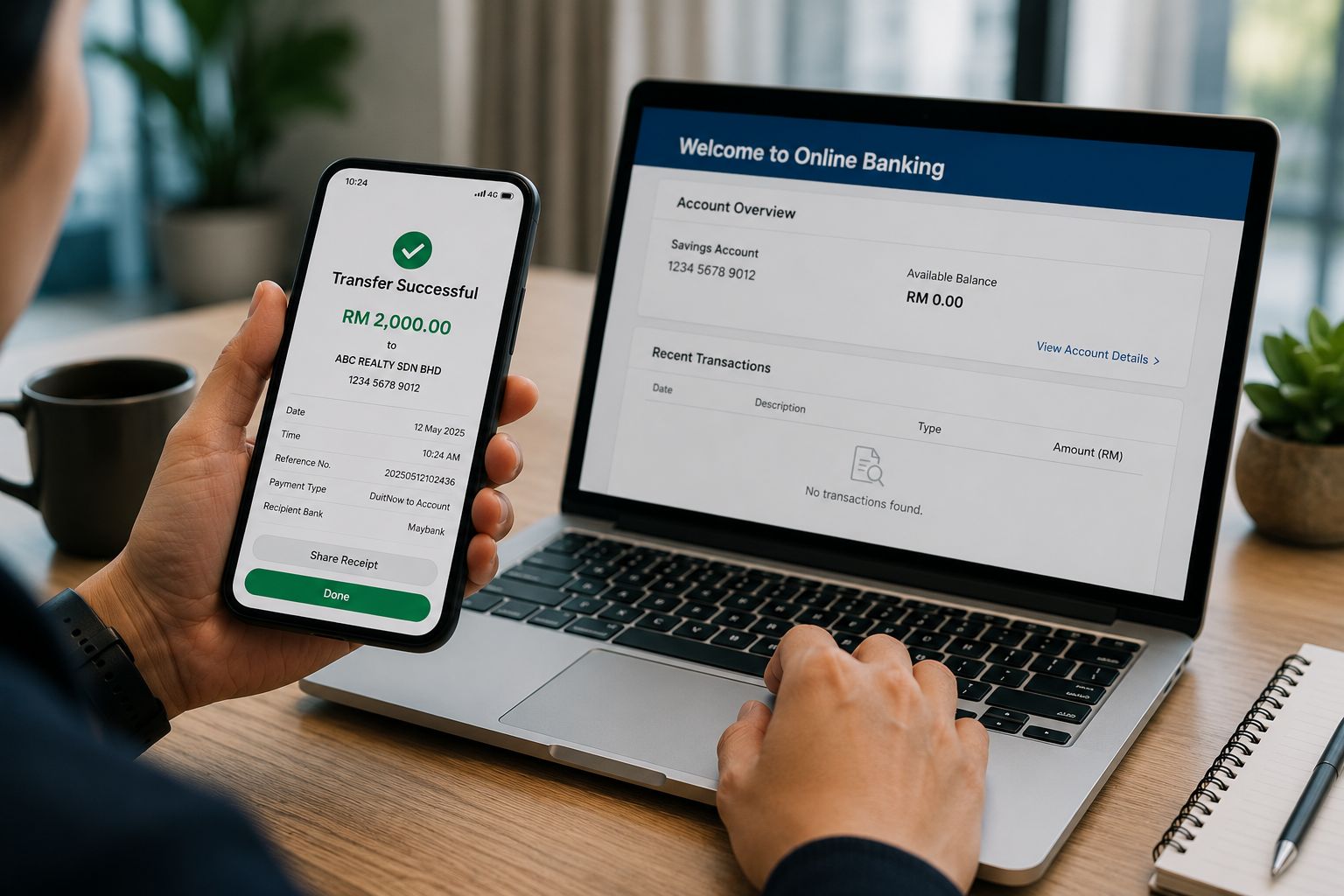
This scam is surprisingly simple.
A tenant sends what appears to be a successful online banking receipt.
Everything looks genuine.
The amount is correct.
The bank logo is there.
The reference number seems legitimate.
Trusting the screenshot, the landlord releases the keys.
Hours later, the bank balance hasn’t changed.
The receipt was edited.
Technology has made it easier than ever to produce convincing-looking payment confirmations.
Fortunately, the solution remains just as simple.
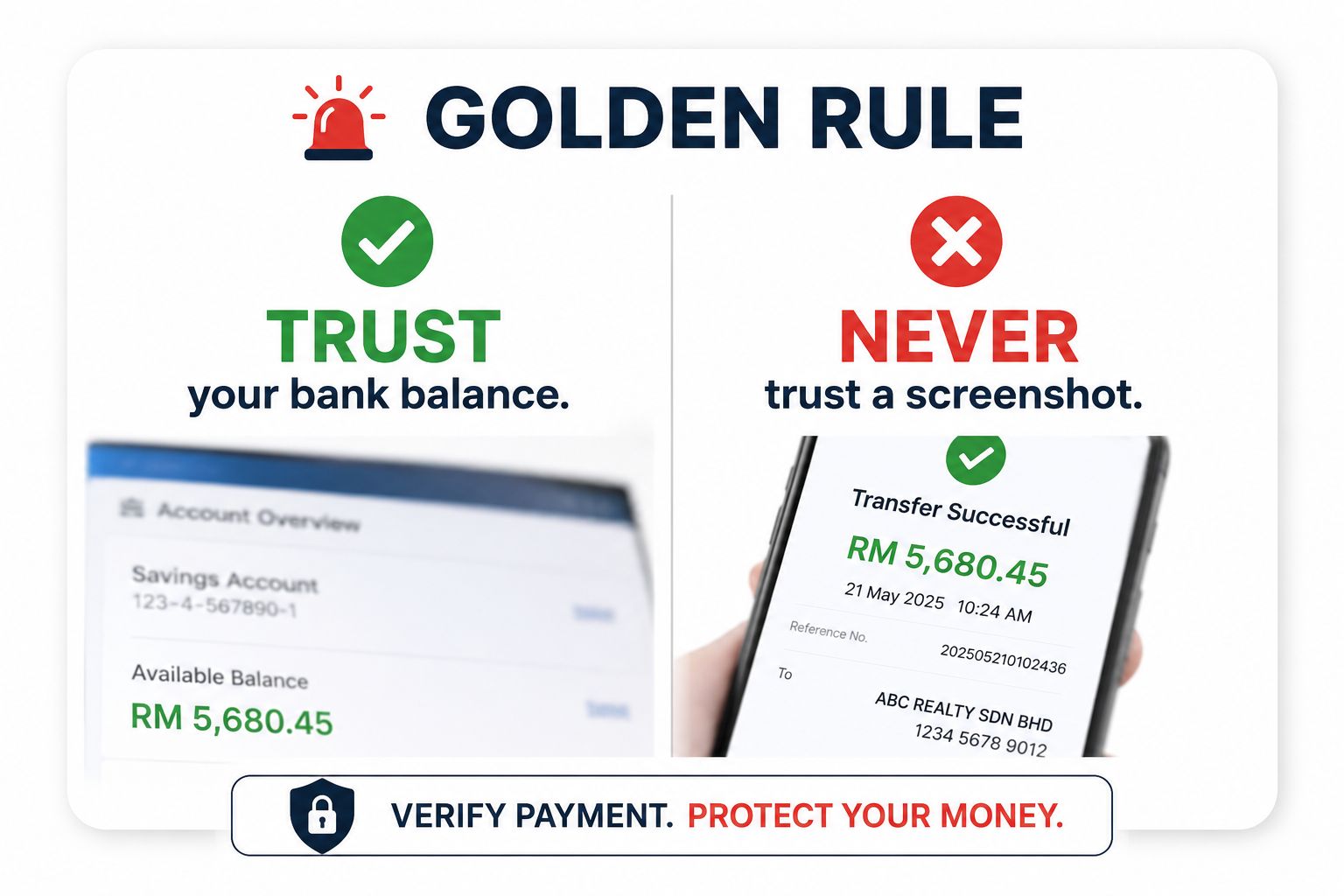
Never rely on screenshots.
Always verify that the funds have actually reached your bank account.
5. “Let’s Skip the Paperwork”
Sometimes, the biggest problems begin with good intentions.
“We don’t need such a detailed tenancy agreement.”
“Let’s keep things simple.”
“We can sort it out later.”
Many landlords and tenants genuinely believe they’re saving time.
Instead, they’re removing the very documents that protect both parties if something goes wrong.
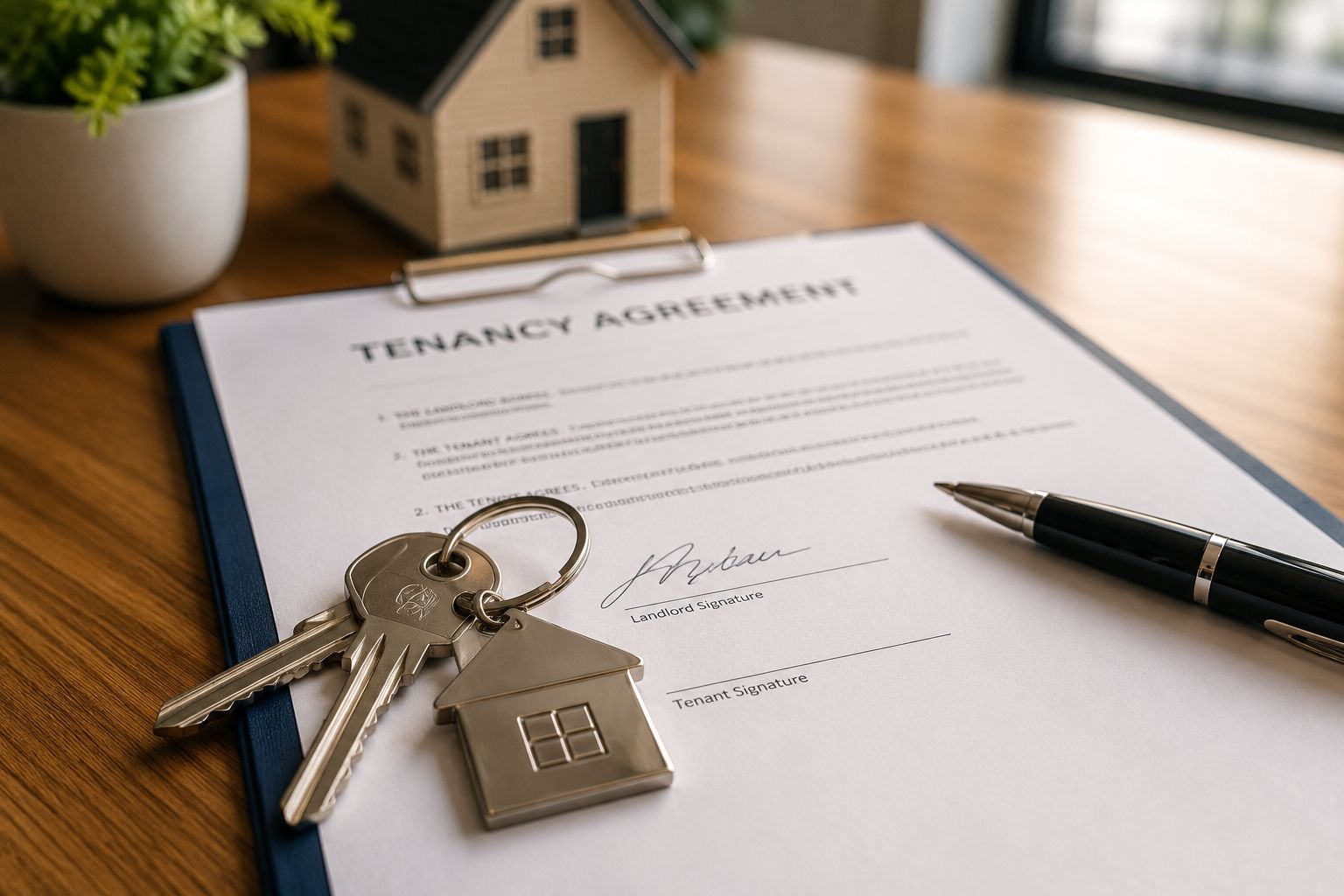
Without a proper tenancy agreement, inventory list and written records, even honest disagreements can become difficult to resolve.
Good paperwork doesn’t create distrust.
It creates clarity.
How to protect yourself:
- Always prepare a proper tenancy agreement.
- Record the property’s condition before handover.
- Keep important discussions in writing whenever possible.
6. “I’m Overseas Right Now…”

This is one of the oldest rental scams around.
Yet it continues to claim victims because the story keeps changing.
Sometimes it’s an owner working overseas.
Sometimes it’s a tenant relocating from another country.
Sometimes a relative needs to collect the keys because of an emergency.
The details differ.
The pattern remains remarkably consistent.
There’s always a reason why normal procedures cannot be followed.
There’s always a reason why payment must happen first.
Whenever someone asks you to bypass your usual process, pause and ask yourself why.
Genuine situations do happen.
But genuine landlords and genuine tenants should also understand the importance of proper verification.
7. The Biggest Scam Isn’t the Documents. It’s Trust.
If there’s one lesson that connects every rental scam, it’s this:
Scammers don’t steal money first.
They earn trust first.
They appear helpful.
They sound knowledgeable.
They build rapport.
Only then do they ask for a deposit, request an exception, or create a sense of urgency.
By the time money changes hands, the victim often feels they’re dealing with someone they already know.
That’s why experience alone isn’t enough.
Good habits matter more than good instincts.
Verification matters more than first impressions.
And following a consistent process matters more than making exceptions for people who appear trustworthy.
Final Thoughts
Rental scams continue to evolve, but the principles of staying safe remain remarkably consistent.
Take your time.
Verify identities.
Confirm payments independently.
Don’t allow urgency to replace good judgement.
Whether you’re a landlord or a tenant, the goal isn’t to become suspicious of everyone. It’s to develop a simple, consistent process that protects everyone involved.
Because in property, trust is important.
But verification is essential.
MyPropertyPlaces Rental Scam Awareness Series
Rental scams are becoming increasingly sophisticated, affecting both landlords and tenants across Malaysia. To help our readers stay informed and better protected, MyPropertyPlaces has created this ongoing educational series covering the psychology behind scams, the latest tactics used by fraudsters, and practical steps you can take to safeguard yourself.
This article is part of the MyPropertyPlaces Rental Scam Awareness Series:
- Why Even Experienced Landlords Still Get Scammed
- 7 Rental Scam Tactics Malaysians Are Still Falling For
- Rental Scams Are Becoming More Sophisticated — Here’s Why
- The Ultimate Rental Scam Prevention Checklist for Landlords and Tenants
We’ll update this section with internal links as each article is published, making it easy for readers to explore the full series.
Disclaimer: This article is intended for educational and informational purposes only and should not be considered legal or financial advice. Rental situations and fraud cases can vary depending on individual circumstances. If you suspect fraudulent activity, seek advice from the relevant authorities or consult a qualified legal professional before taking action.