

A recent Court of Appeal decision reminds homebuyers that “full and final settlement” really does mean… well… full and final.
Buying a home is a little like getting married.
You sign a lot of documents. You make a lot of promises. And somewhere in the mountain of paperwork is a page that deserves far more attention than most people give it.
This week, Malaysia’s Court of Appeal reminded everyone just how important one of those documents can be. Because if you’ve accepted a “full and final settlement” for your Liquidated Ascertained Damages (LAD), you may not be able to return later asking for more.
Think of it this way.
You’ve just finished a huge buffet. The waiter comes over. “Everything good?”
You smile, pat your stomach and say,
“I’m completely full.”
Five minutes later, you suddenly spot fresh butter prawns coming out of the kitchen.
Can you ask for another round?
Maybe.
But don’t be surprised if the restaurant politely reminds you…
“You already said you were done.”
That’s essentially what this court case was about.
First Things First… What’s LAD?

Let’s keep this simple.
If a developer hands over your property later than the date promised in the Sale and Purchase Agreement (SPA), you’re generally entitled to compensation.
That compensation is called Liquidated Ascertained Damages, or LAD.
In plain English, it’s the law’s way of saying,
“You made the buyer wait longer than agreed. You should compensate them for that.”
Whether you’re paying rent while waiting, servicing a loan, or simply watching your dream home remain behind construction hoardings month after month, LAD exists to compensate for that delay.
So What Happened?
The case involved buyers of homes in the EkoCheras development.
The developer acknowledged there had been delays and paid LAD to the purchasers.
Nothing unusual there.
But before receiving the payment, the buyers signed settlement letters stating that the payment was accepted as “full and final settlement.”
Everyone moved on.
Or so they thought.
Then Came The Plot Twist
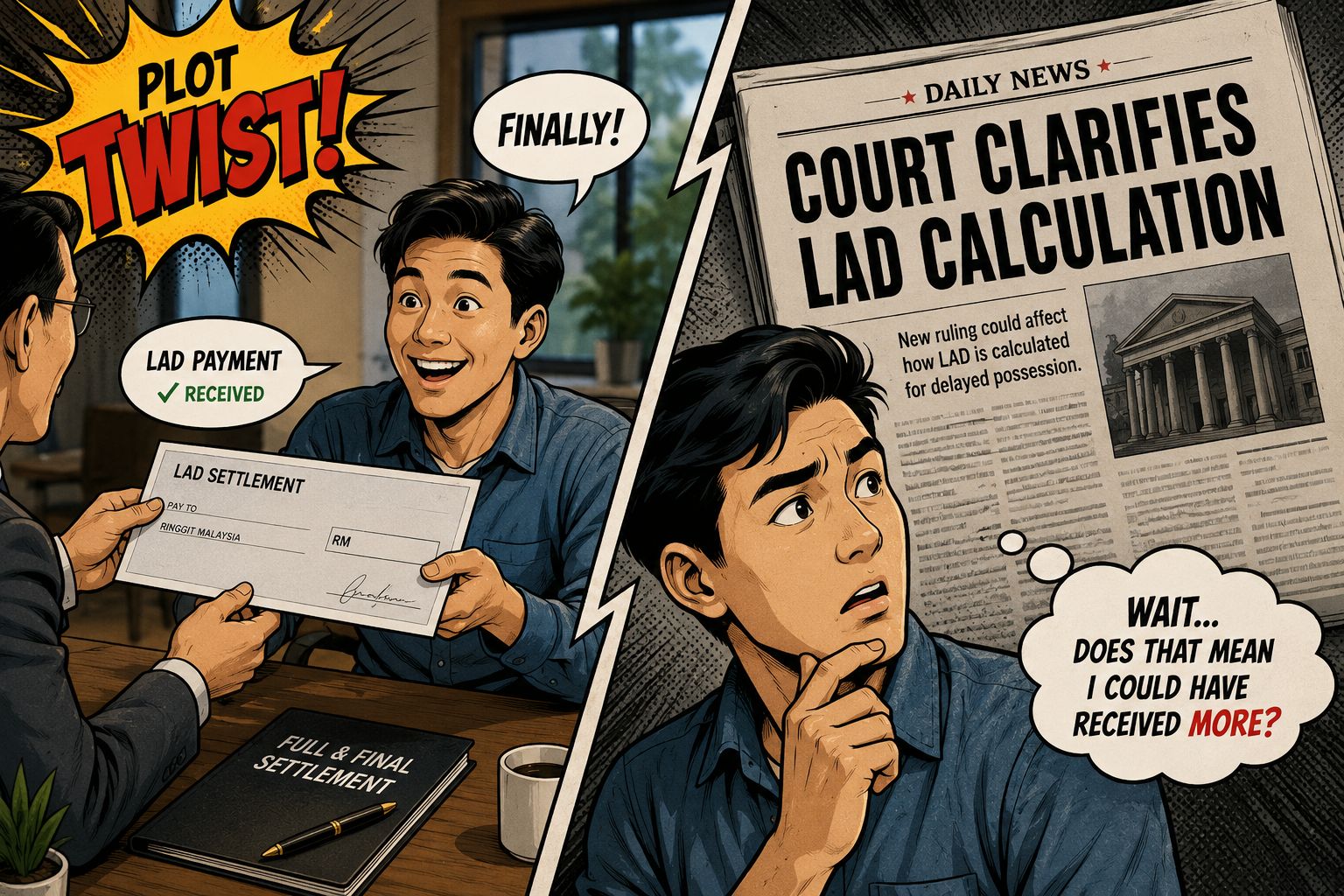
A few years later, several landmark court decisions strengthened homebuyers’ rights regarding how LAD should be calculated.
Some buyers realised that under these newer legal principles, they might actually have been entitled to more compensation than they originally received.
Naturally, they asked a perfectly reasonable question.
“If the courts now say the calculation should be different… can we claim the balance?”
The High Court initially said yes.
The developer appealed.
This week, the Court of Appeal said no.
Wait… Why?
Here’s the interesting part.
This wasn’t really about whether the buyers deserved LAD.
Everyone agreed they did.
The real issue was much simpler.
Could someone who had already signed a document saying,
“This is a full and final settlement.”
later reopen the same dispute?
The Court of Appeal decided they could not.
Once both parties voluntarily settled the matter, that settlement brought the dispute to an end.
Four Very Expensive Words

Let’s talk about these words.
Full.
And.
Final.
Settlement.
They look harmless. They’re only four words. But in legal documents, they carry enormous weight.
They tell the court,
“We’ve settled this dispute. Neither side has anything further to claim.”
It’s a bit like selling your car.
The buyer pays you. You sign all the transfer documents. A month later you discover similar cars are selling for RM15,000 more.
Painful?
Perhaps.
But generally speaking, the deal has already been done.
Doesn’t The Housing Development Act Protect Buyers?
Absolutely.
The Housing Development Act remains one of the strongest consumer protection laws in Malaysia. This judgment doesn’t weaken those protections.
Instead, the Court made an important distinction. The law protects buyers from unfair contractual terms imposed by developers. But once a dispute has already arisen, both parties are still free to negotiate a settlement if they wish.
In other words…
The law protects your rights. It also respects your decision to settle those rights.
Should Buyers Reject Every Settlement?
Not at all.
Sometimes accepting a settlement is the most sensible decision. Court cases can take years. Legal fees aren’t exactly famous for being cheap. Some buyers simply want closure so they can get on with their lives. There’s absolutely nothing wrong with settling.
The lesson here isn’t, “Never settle.”
The lesson is, “Know exactly what you’re settling.”
Before You Sign Anything…
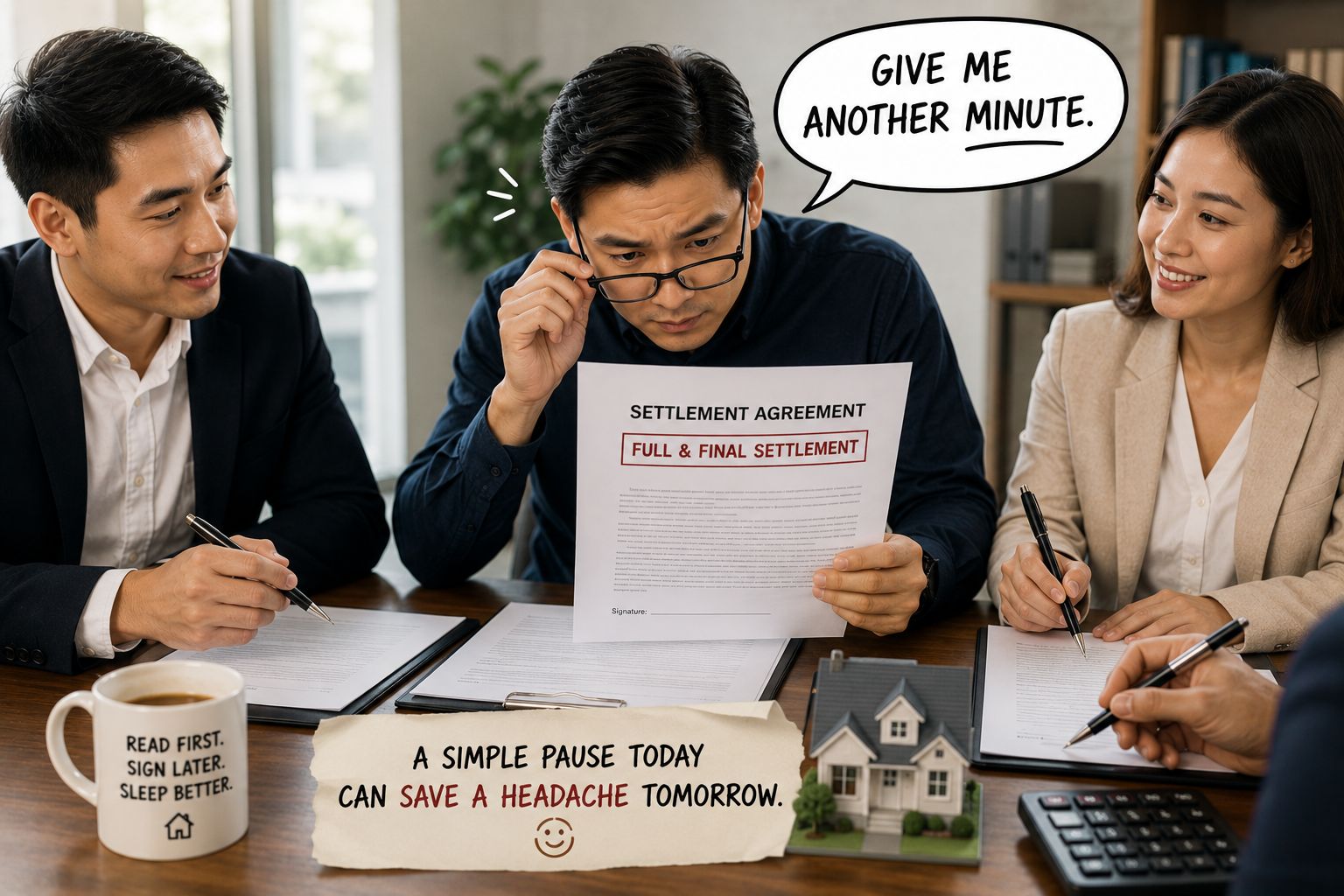
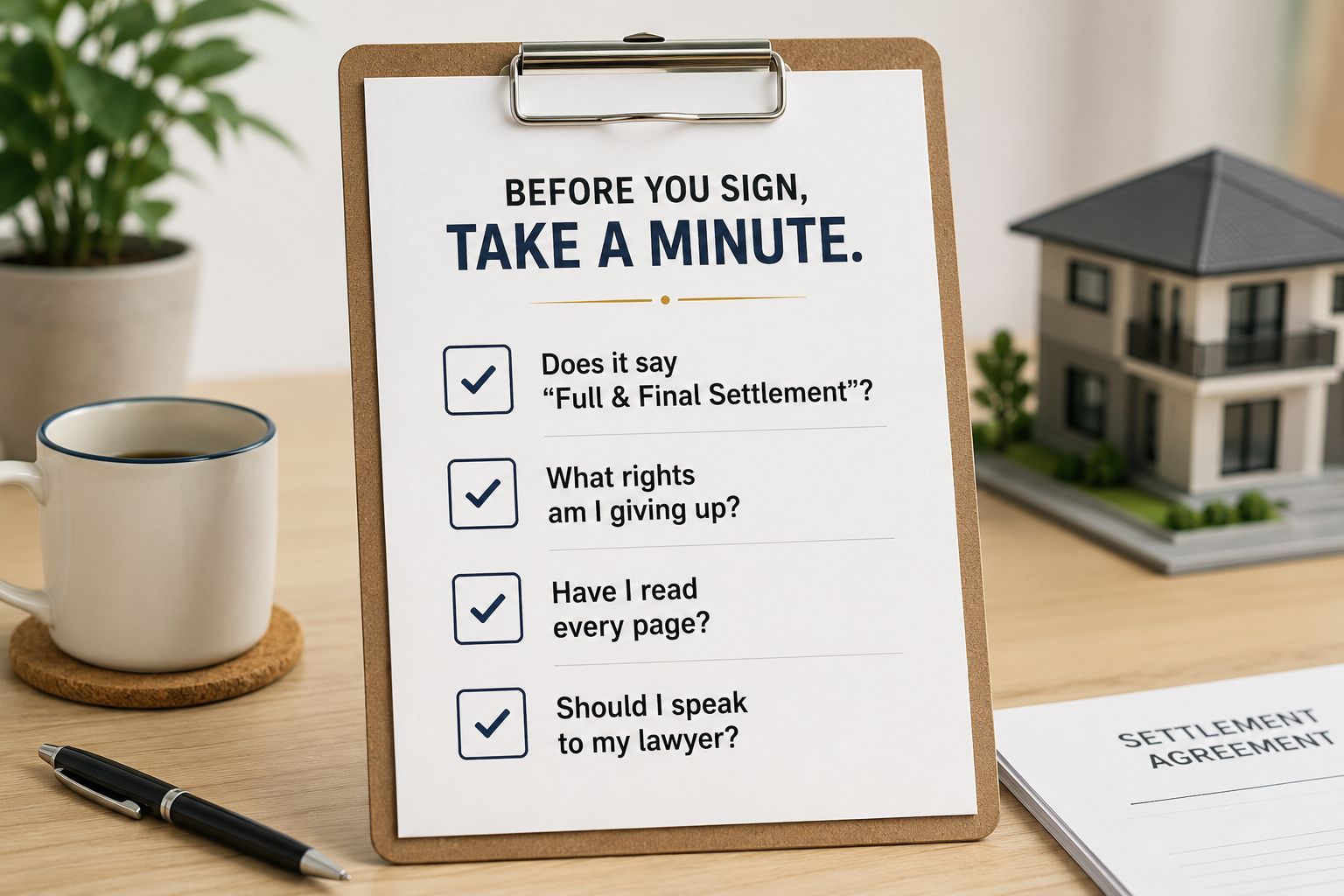
If you’re ever presented with a settlement agreement, pause for a moment and ask yourself:
✔ Does it say “full and final settlement”?
✔ Does it explain what claims you’re giving up?
✔ Have you read every page instead of just the signature page?
✔ Is the amount significant enough that it’s worth asking your lawyer first?
Legal advice may cost a little. Signing something you don’t fully understand can cost much more.
Why This Decision Matters
This ruling doesn’t change the law on LAD itself. Instead, it reinforces something that’s easy to overlook.
A settlement agreement isn’t just another piece of paperwork. It’s exactly what its name says.
A settlement.
Once you’ve agreed to settle a dispute, courts are generally reluctant to let either party reopen it simply because circumstances later become more favourable.
That’s not unique to property law.
It’s a principle that helps settlements actually mean something.
MyPropertyPlaces Perspective

This Court of Appeal decision isn’t telling buyers to reject settlements. It’s reminding us that our signatures carry weight.
If a document says “full and final settlement,” don’t assume it’s just another administrative form.
Those four words could determine whether you ever get another opportunity to pursue additional compensation, even if later court decisions appear more favourable. The lesson isn’t to distrust settlement agreements.
It’s to understand them. Before signing any legal document, take the time to read it carefully and, where appropriate, seek independent legal advice. When it comes to property, the smallest paragraph can sometimes have the biggest consequences.
Sources
This article is based on the following reports and publicly available court coverage:
- Free Malaysia Today. “Housebuyers who accept LAD settlements cannot seek more compensation, court rules.” Published 15 July 2026.
- New Straits Times. “Appeals Court overturns High Court ruling on homebuyers’ additional LAD claims.” Published 15 July 2026.
Readers who are directly affected by this decision are encouraged to refer to the full judgments (where available) and seek independent legal advice regarding their own circumstances.
Disclaimer: This article is intended for general information and educational purposes only. It summarises publicly reported court proceedings and should not be interpreted as legal advice. The opinions expressed in the “MyPropertyPlaces Perspective” section are editorial commentary by MyPropertyPlaces and should not be relied upon as legal guidance. Every property transaction and legal dispute is unique. If you are involved in a claim relating to Liquidated Ascertained Damages (LAD) or any settlement agreement, you should consult a qualified advocate and solicitor for advice specific to your circumstances.